The goal of the project was to create a new product that can create a significant impression on the market segments while focusing on the helping the indviduals in crucial tasks.
During the 4 months of the project timeline, we had to find the user demographics, and different user's motivation towards our project the Senior citizens aged 60+ living in multi-story homes or apartments in urban areas, seeking to maintain independence and safety without relocating.
This was the academic project which was focusing on the Industrial product design. Considering the elderly population and those with mobility-related disabilities, the potential market could be in the millions. However, the actual market size would be smaller due to economic factors. In the market study we explored different segmentations such as demographic, psychographic, geographic and behavioral. After the research different scenarios, the targeting population came out which had maximum need and could use our product.
citizens aged 60+ living in multi-story homes or apartments in urban areas, seeking to maintain independence and safety without relocating.
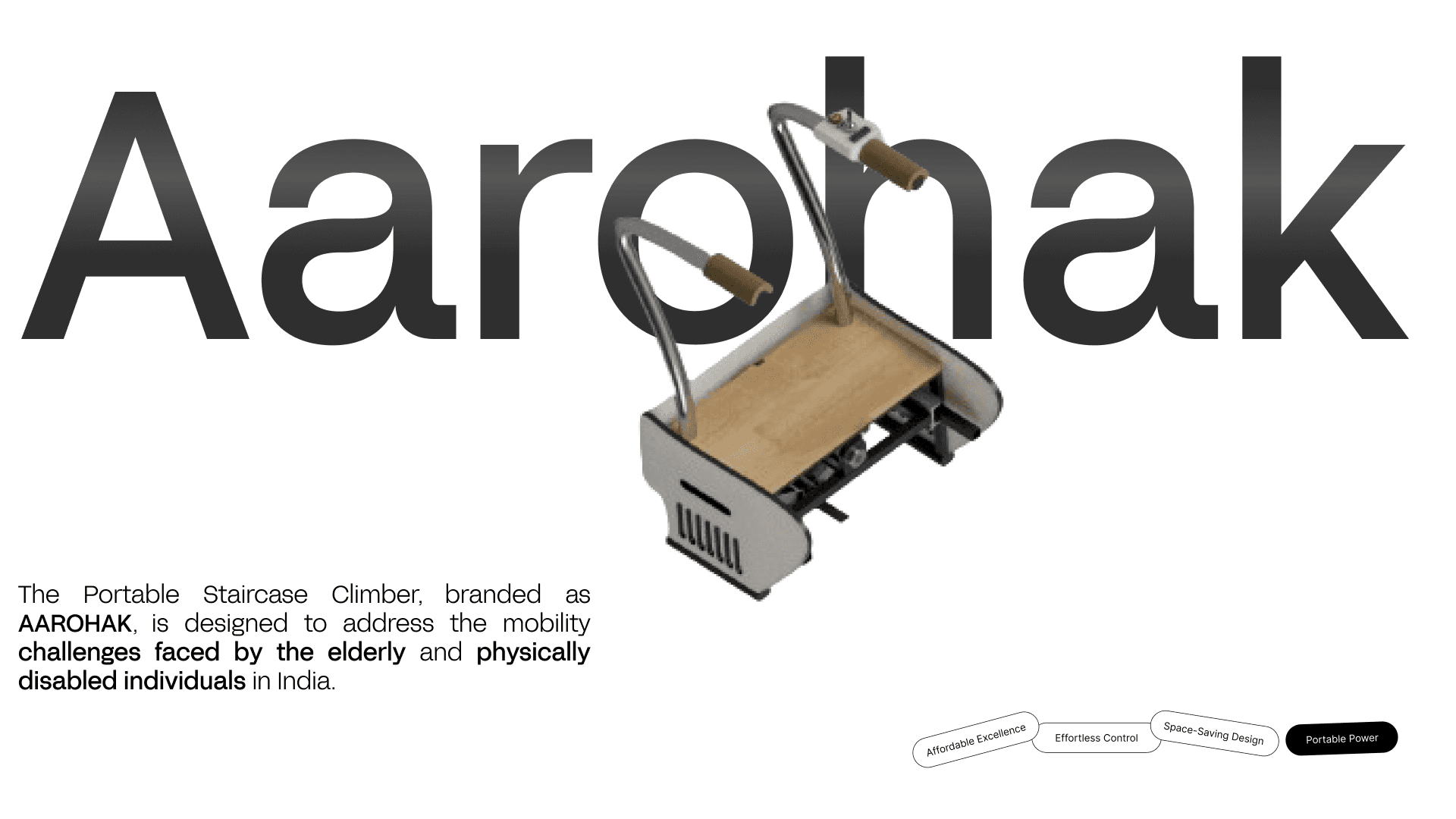
1. Introduction The development of assistive technology for elderly and temporarily disabled individuals is crucial in enhancing their mobility and independence. Our team, consisting of mechanical and computer science engineers, developed a portable staircase climber as part of the Integrated Product Development course (August - November 2024). The product was designed to be patentable, innovative, and impactful.
2. Problem Statement Many elderly and temporarily disabled individuals struggle with staircase navigation, limiting their independence and increasing the risk of accidents. Existing solutions are often expensive, bulky, or require permanent installations. Our goal was to design a portable, cost-effective, and easy-to-use device that enables safe staircase climbing.
firstly, we did the user research in the different contexts then we fixated in the Healthtech that can help the people in their daily life. By exploring different hospitals, we noticed that the lifts were used more to transfer to transfer the patients in different floors while the stairs were not used by many patients so we wanted an easy transportation device that can transfer these patients across different floors. After that we looked at the materials that can bear the weights and feasibility by running the simulation in the Adams. After a successful simulation, this gave us the confidence to construct the machine and move forward with the design
after getting the gist of functionality and USP of the product which we gathered from the competitive audit of the market and available products. we started ideating on the concept and the functionality. we explored different methods of movements and
mechanisms. After a long session on the discussion about the functionality, the key aspect we were focusing on here is the how to make a mechanism that will be safe for the elderly and disabled. After that we focused on the portability of it where we have to eliminate and gather new parts which will help us to make it light weight as well as the safe enough to not break down while working during the stress environment.
It took us several days to tweak and select the materials to simulate the machine and its functionality while also following nearly all the constraints that were set during the ideation phase. After the simulation process, we rendered the model.
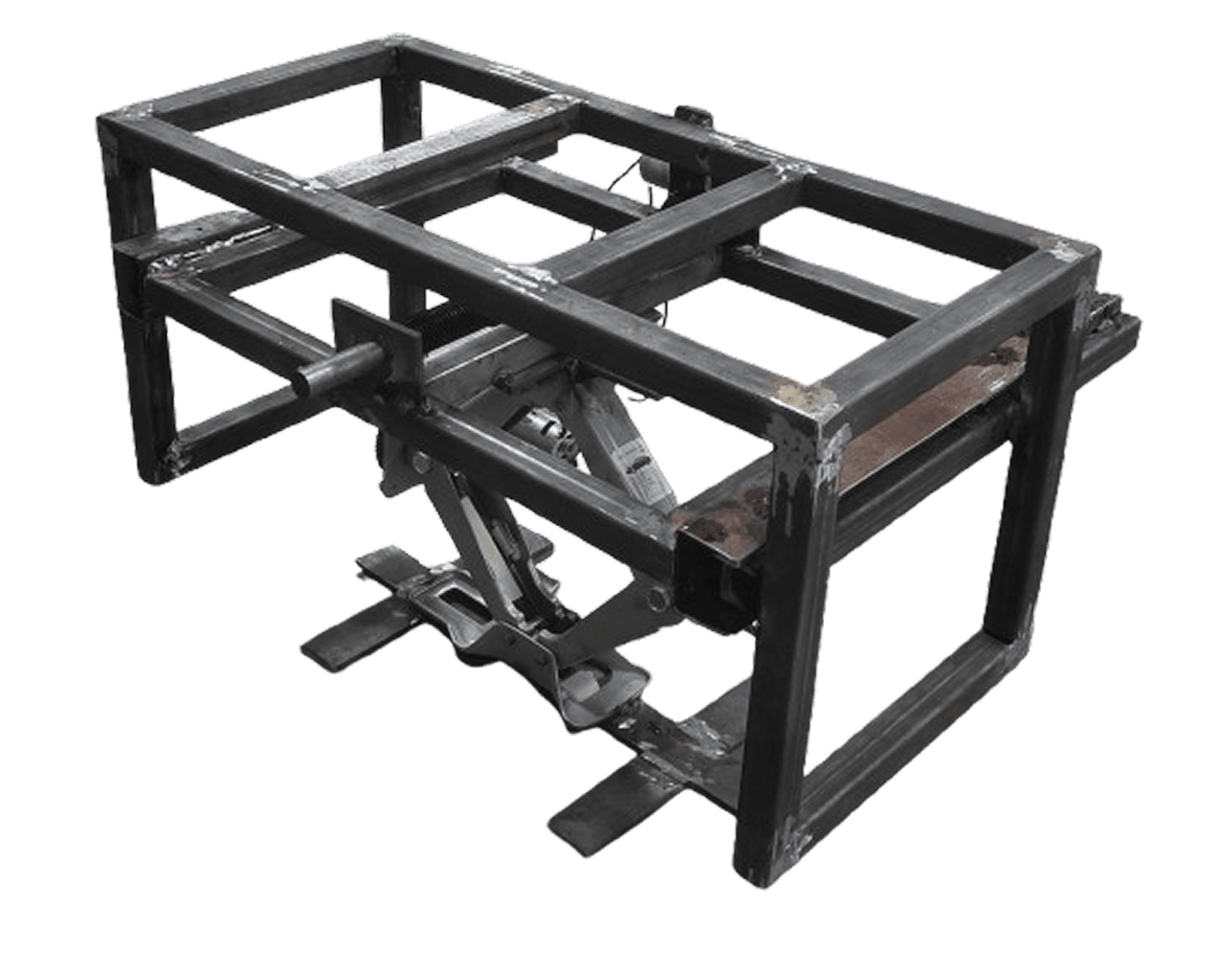
Within 2 weeks we developed initial prototype and tested it during different environments and surfaces as well as different users. After the getting the test results, we improved in the model prototype.
The challenged about this project was certainly the how to think about the new mechanism and also the lightweight but strong material placement as well as how can we fix the center of gravity, so it doesn't topple off the steps of stairs. The development of the climber was done with the inclusion of different heights of the stairs and the width. Simple and intuitive controls are used to help the person for providing the controls.
The portable staircase climber has the potential to revolutionize mobility assistance. Future improvements include optimizing battery efficiency, enhancing automation, and integrating smart sensors for adaptive control. With further development and refinement, this product could make a significant impact on the lives of those in need.